
Here you can find supplementary information on the world found in J.C. Hartcarver’s books. New information will be added as the series progresses.
Kaihals (pronounced like kales): A lonely continent at the center of an endless ocean shrouded in fog. I’ve trekked across it for the last 20+ years, hoping to uncover more of its secrets. Please forgive me that I only know so much, but will offer to share the best of my knowledge with you, adding information whenever I can. Kaihals has been divided for the last few centuries by a barrier called Hanhelin’s Gate, which divides the two major regions: the Lightlands and the Darklands. Hanhelin’s Gate has magical fortifications to keep the dangerous creatures in the Darklands (the north side) out of the Lightlands (the south side). The Darklands remain an untamed land, despite the fact that it was organized into kingdoms long ago. Today it is populated, nonetheless, by many types of people and animals. The Lightlands are well civilized and orderly, home to two different countries: the Kingdom of Sharr and the Sovereign State of Norr.
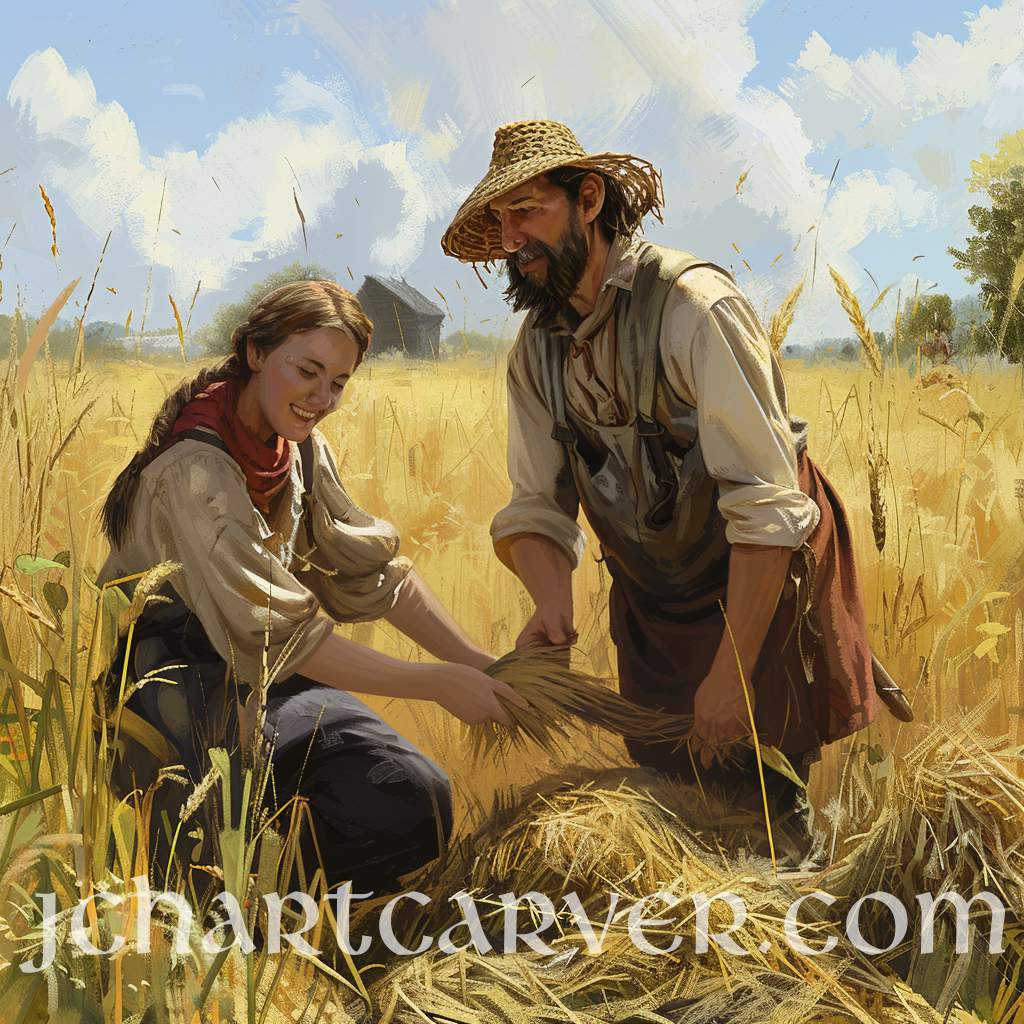
Humans: These folk are quite like you’d expect. They only live for about 60-80 years, are considered fast breeders, come in a variety of shapes and sizes, and are not so adept at magic as other creatures can be (though most of them can learn from the wide range of styles found on the continent). They can often be homely creatures, hardworking (or sometimes not so much), and enjoy the simple pleasures of food, drink, and music. They are the most adaptable creatures in Kaihals, able to find a living in any surprising corner of the continent.

Elves: Here’s an enigmatic race of people, similar enough to humans on the outside, besides their pointed ears and fair features. The elven existence balances a refined culture of many harsh rules and laws with a primitive society and close connection to their primal instincts. As humans are always looking for new ideas and inventions, the elves feel they have it all figured out, but they have good reason for this. After suffering various hardships in their history, the elves have closed their forest state of Norr to the outside world, and only deal with outsiders in a strict, no-nonsense fashion. Aside from that, they breed far slower than humans and struggle with a severe male to female imbalance (males being the most numerous), resulting in strained situations among their own kind. This is the reason for their inflexible laws and regulations. The elves are highly disciplined in their everyday lives, favoring quality over quantity in every aspect. They are loyal, loving, and fierce in their duty and honor to their loved ones. By their own Norrian language, the males are properly referred to as saehgahn (pronounced say-gone) instead of “men,” and the females are considered faerhain (fair-hayn). Norrian law forbids the elves from practicing any outside magic. Instead, many elves are born with some kind of natural magical ability, and are only allowed to practice these abilities.
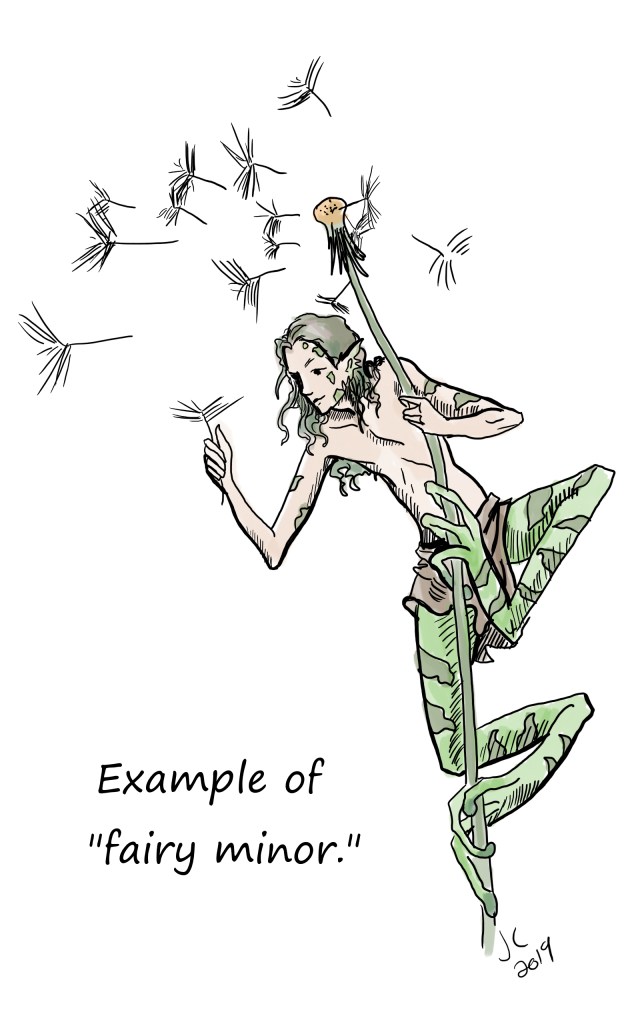
Fairies: These hard-to-fathom beings fill the unseen world beyond human vision. It is said that they come, and continue to come, through holes in the dimensional wall from which they originated. They don’t come of their own calculations, instead they “spill” through the portals, lost in their absentminded drifting. In this land which is foreign to them, they move around as independents, yet at the same time make up a whole all their own. None are old and none are new; there are only those who’ve been on the mortal plane longer than others. Though they are invisible, some humans have managed to glimpse them, while other humans have seen fairies that possess enough energy to make themselves purposely visible.
The most captivating aspect about fairies is their ability to collect energy they store within themselves and evolve into higher beings. They mostly collect energy from the mortal races of Kaihals via channels of emotional outbursts, particularly fear, surprise, and anguish, and can also collect energy from natural elements (water, fire, etc.). Names have been given to the different levels fairies have achieved and are as such, listed in order lowest to greatest: wisp, bibble, sprott, fairy minor, fairy major, and pixie. On the matter of individual names, most fairies have none. Since names are something mortal creatures give to each other, only fairies who’ve been seen by a mortal may carry the name they received from them (if such a thing occurred).
For the most part, fairies whittle away their infinite time by watching mortals for the entertainment factor and siphoning the energy expelled during each visit. Higher level fairies can find new, more hands-on ways to collect energy and in greater amounts. When they evolve to higher levels, they may also become exponentially more dangerous, but they always run the risk of using up their energy stores, so each one must act wisely.
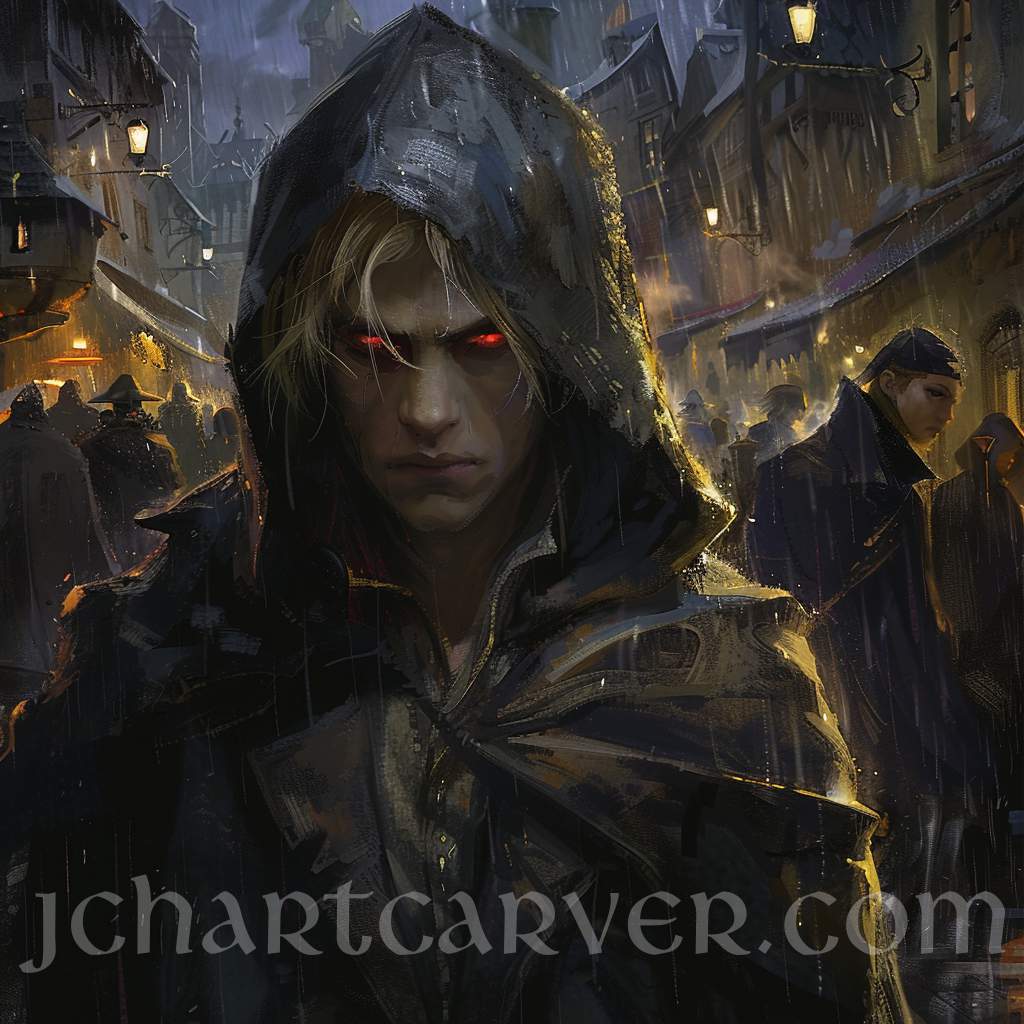
Thaccilians: The most unnatural of races in the Darklands, Thaccilians were spawned by one of the most powerful pixies to graze the earth, called Thaxyl. They were created out of sheer hatred for humankind, as predators to hunt and kill them. Thaccilians appear similarly to humans, except for their red irises, and are easily able to blend in around town. Their natural instincts dictate to do so, as well as to mimic human behavior in all aspects: clothing, manners, language, etc. Thaccilians have the inborn ability to hear the heartbeats of all humans around them. This ability is used to hunt humans for food, particularly their hearts, which offers the most nutrients. Today, there aren’t many Thaccilians left in the world due to the combative efforts of another pixie, named Lusche, who loved the humans.
More on Elven Culture
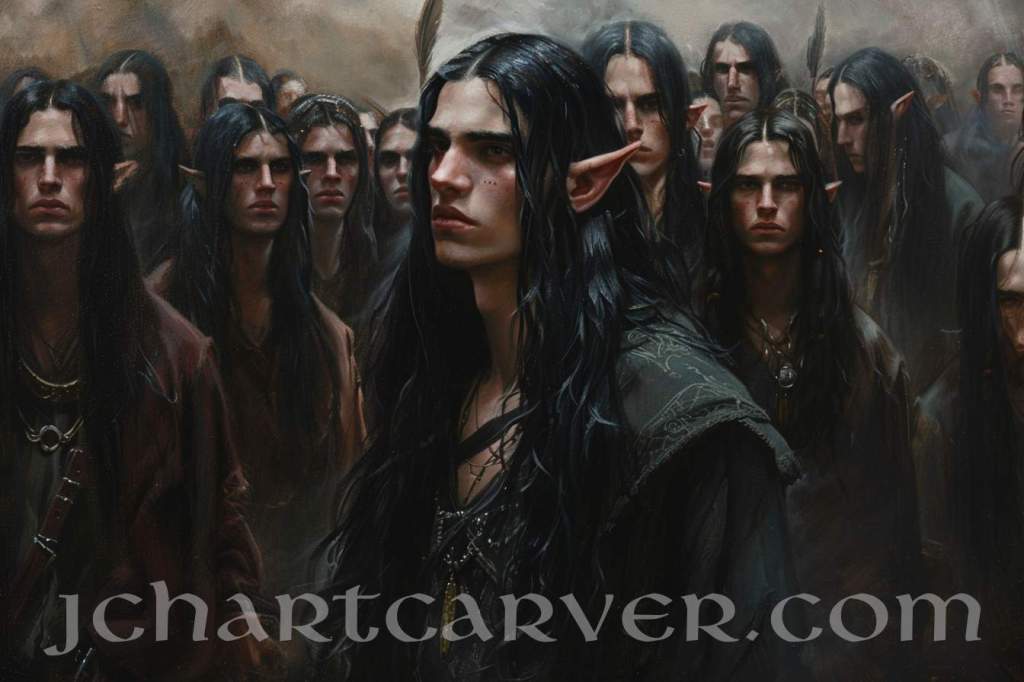
Saehgahn: One of the most notable orders in Kaihals, I must talk about, is the elven saehgahn (pronounced “say-gone”). The word saehgahn counts for two groups in Norrian society: any individual who is male, and a sacred order to which they are all bound. The word generally translates to “servant,” as it’s every male’s duty to serve as guardian to the things elven society holds dear. This especially pertains to females, a resource the elves hold in highest regard. Every elven male born to Norrian society must become a saehgahn. They do have a choice in the matter, but a refusal can be met with a variety of consequences, including death. Even from birth, the males are referred to as “saeghar” (“too young to serve”) until they’ve crossed the threshold into the adult saehgahn order. The duties of the saehgahn are physical in many aspects, particularly martial. First and foremost, a saehgahn is a guardian, capable of defending his home, clan, and country. After that, skills in other physical aspects, such as building and crafting are held in high regard. Extracurricular skills like the arts and music are left to elven females. Third, a duty highly cherished and yearned for, is the physical duty of breeding. Very few saehgahn are considered “lucky” enough to perform this duty with a wife due to the severe male-to-female imbalance. But all males harbor a secret longing to fulfill this duty. Not all male elves can participate in the order of the saehgahn, however, as some are deemed unworthy. These unworthy males are categorized as sarakren (“he is forbidden”), a status that comes with a branded symbol applied to their bodies. Sarakren males can participate in fighting and building, but are banned from marrying.

Faerhain: The females of the elven race are held in highest regard. Faerhain are as beautiful as they are rare, and jealously guarded by the males. Faerhain are only born one to every three males in Norr, and this fact lies behind much of the elves’ attitudes toward marriage, travel, and security among the clans. Each faerhain carries a heavy burden too, one being which path to choose upon her coming-of-age, the “hall” or the “home,” and the other being their decision in choosing a husband. For the marriage custom, the pairings of the elves are decided solely by the females, and the males are not allowed to try to sway them. No flirting of any kind is permitted. The best the saehgahn can do is flaunt their bodies and abilities in public for the females to observe. When a female chooses a male, she sends him an official invitation—in the form of a token—to marriage and the male then has the option to choose yes or no. It is known far and wide across Norr that the males rarely refuse a marriage proposal, regardless of who sent the token. Faerhain who choose the “home” are obligated to choose a husband soon. The longer she waits, the more pressure the Desteer puts on her to make her decision. She is also obligated to perform the marriage ritual with her husband regularly and bear at least one child in her lifetime. Alternately, faerhain who choose the “hall” go to live with and train to become a Desteer maiden, a religious leader. Desteer maidens may not marry and are obligated to serve the clan in moral, medical, and civic ways. They lead the clan in prayer, give advice, heal, deliver babies, and use their typical psychic abilities to help the clan members.
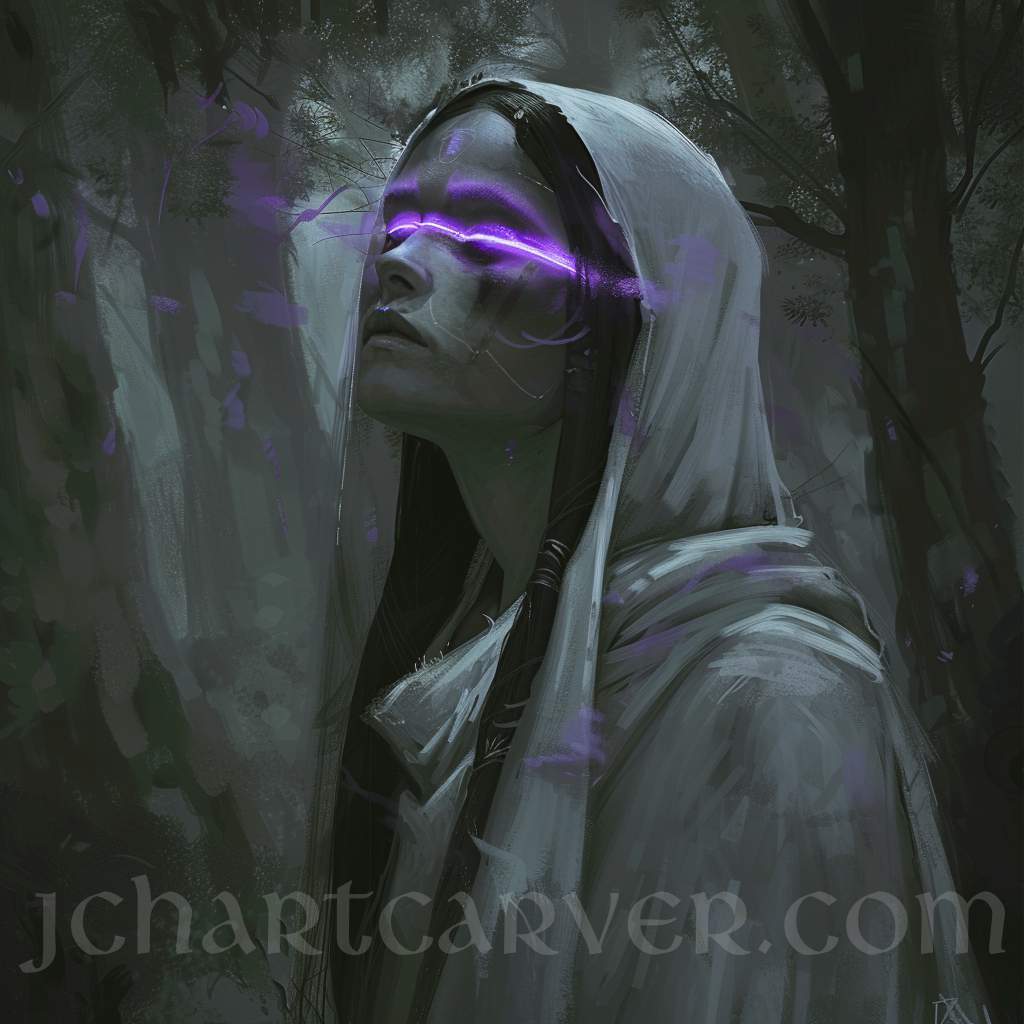
The Desteer: If you’re traveling through Norr, beware. This group of austere faerhain aren’t directly violent (in most cases), but they wield a lot of power and no sense of humor. The Desteer is a religious cult in Norrian society, and though I say “cult,” which may conjure up images of a strange, small group, they really are a large official religious order. They can also be referred to as a cult by us outsiders because they are indeed strange. The Desteer is a large network of females who were born with and have honed special powers, especially of the telepathic kind, and grew up to make the heavy choice of joining this religious group. When a female elf reaches the age of maturity, she can make one of two choices. These choices are literally laid before her as she stands at the center of town and considers two paths. One path leading back to her house, and the other leading to the Desteer Hall. She chooses the “home” if she desires to get married and become the matron of her own household, and there she delves into deeper training with her mother in the arts of being a house matron (a highly revered and cherished status). When she chooses the “hall,” she leaves her home forever, never to marry, and to begin an intense training regimen in the arts of the Desteer: honing her telepathy (having such a talent to begin with helped shape her choice); serving as judge and advisory for the citizenry, especially the other females; performing weddings and other ceremonies, healing, and leading prayer service to the Bright One. As pleasant as these things may sound, I must stress again: beware. Their training shapes them into cold, hard, unjoyful creatures who will only judge you as soon as you step into Norr’s forest shade. All the elves know this, as they are judged too, the saehgahn especially must watch themselves as they can be sentenced easily to death if the Desteer decide they are dishonorable, tainted with foreign lineage, or festering with sexual thoughts and desires. The regular faerhain, too, are being judged, and can easily earn a brutal switching in the cold night air if the Desteer think they’ve been acting foolish somehow. Indeed, it is the Desteer’s job to keep the citizens in check. They are preparing them to meet the Bright One someday, and this is a matter so serious that the Desteer maidens will devote their lives to making sure every clan member is pure and honorable, both inside and out. This is where their powers of telepathy are most useful. They use a spell called milhanrajea to look into the thoughts of the citizens. This is how they can easily see if someone committed a crime or is holding some other dire secret. In times of war between the clans, they will look into the minds of captured enemy saehgahn to discover useful secrets. They’ll also often use this ability to settle disputes between married couples, to better reach a solution and send the two home in better harmony. Though feared and respected to an extreme degree, the Desteer are a treasured staple in Norrian society. Their establishment dates back to ancient times in archaic stories involving the Bright One’s personal visitations to the elves. They are a severe group established for severe purposes.

The Overseas Taint: If you are traveling through Norr and happen to see a male elf with blond hair, consider yourself lucky! Or perhaps you might run the other way and alert the nearest clan militia, for a saehgahn with blond hair is the sign of the Overseas Taint. If he has green eyes to go with it, that’s even worse! Norrian society is largely built around a fable of fear and loathing. In fact, it just might be the reason why females are so scarce. The fable has to do with a princess of Norr in ancient times and a lover she had for mere minutes. The bad part about it was that she was actually named for the Bright One himself. You can read a better version of this in A Basket of Devils. Anyway, to make a long story short, the princess’s illicit lover was banished by their god to a desolate island somewhere over the sea where he was seduced by the pale and beautiful daughter of an infamous demon called the Swine. Afterward, the Swine’s daughter gave birth to a litter of cute baby elves with blond hair and they were set adrift back to Norr to spread chaos and fear as punishment to the elves. On the surface, these blond elves with a tainted bloodline are nice-looking, they may even be pleasant to talk to. But their taint is known to cause negative magical abilities in them they may abuse for their own gain, and also foul personality disorders. Blond saehgahn will often be seen going against the grain, with ideas and ambitions of their own. Maybe the Norrian clans just don’t like running into someone who seems different…or maybe their paranoia is well-placed…
Check back soon, there’s more to come!
 J.C. Hartcarver